
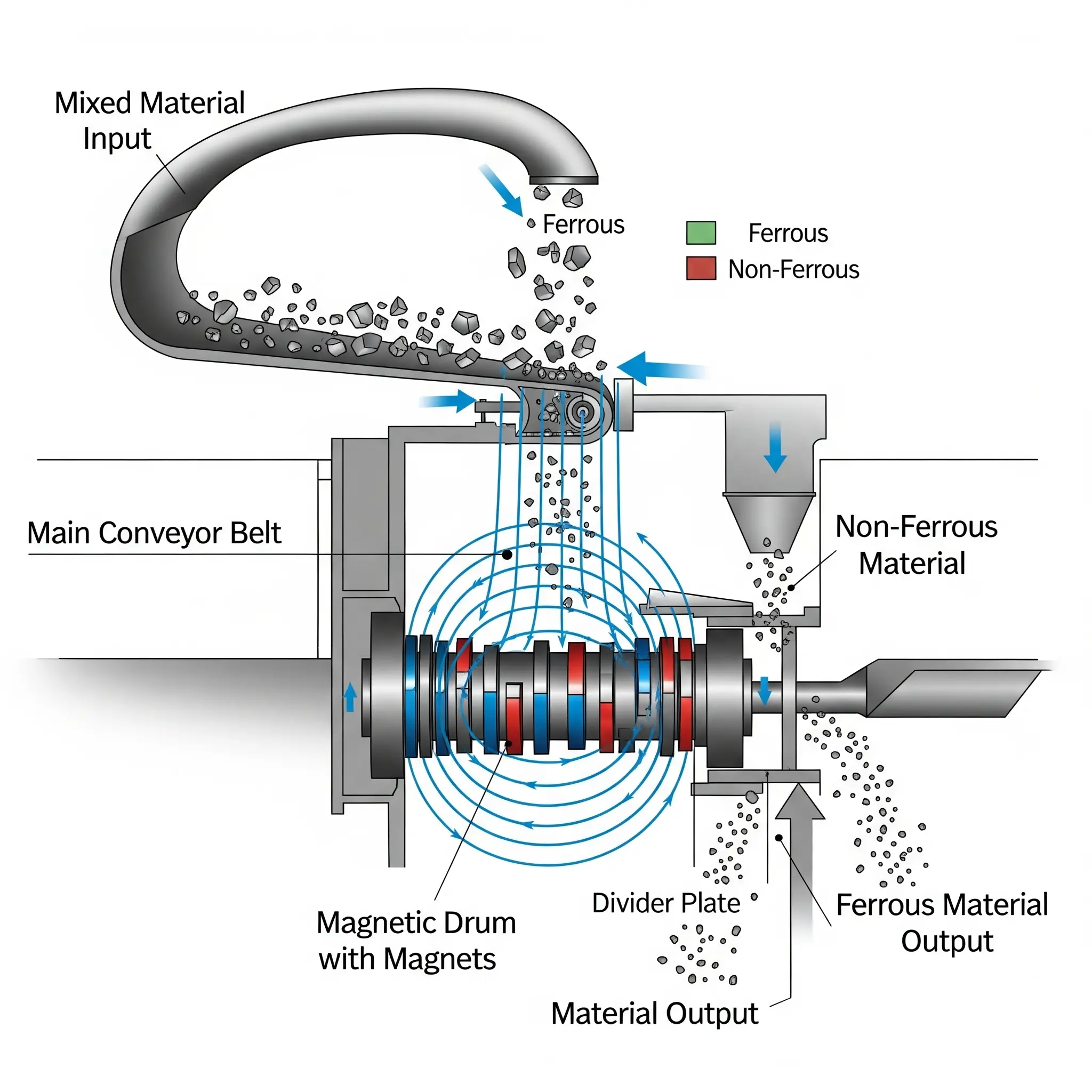
Magnetic separators are essential equipment in industries like mining, recycling, food processing, and ceramics. At the core of every separator is a magnet — the key component that creates the magnetic field necessary for material separation. This guide explains what magnetic separators are, their applications, how they work, and the types of magnets (NdFeB, ferrite, SmCo, and electromagnets) commonly used.
What Is a Magnetic Separator?
A magnetic separator is a device that uses a magnetic field to separate magnetic materials from non-magnetic ones. This separation can be applied to dry powders, liquid slurries, or bulk solid materials. Magnetic separators help improve product purity, protect machinery, and recover valuable metals.
Key benefits of magnetic separators:
- Remove iron and steel contaminants.
- Improve end-product quality.
- Recover valuable magnetic minerals.
- Prevent damage to crushers, mills, and other processing equipment.
Applications of Magnetic Separators
Magnetic separators are used in a wide range of industries:
- Mining & Mineral Processing – Separation of magnetite, hematite, and ilmenite.
- Recycling Industry – Removing ferrous metals from scrap, plastics, and crushed waste.
- Food Processing – Capturing fine ferrous contaminants in flour, sugar, and spices.
- Ceramics & Glass – Eliminating iron impurities to improve product appearance.
- Chemicals & Pharmaceuticals – Ensuring product purity in sensitive production lines.
How Magnetic Separators Work
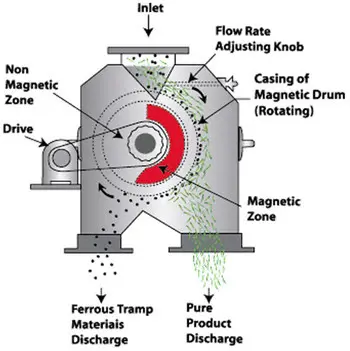
Magnetic separators create a magnetic field that attracts and holds magnetic particles while allowing non-magnetic materials to pass through. The process works as follows:
- Material Feeding – Powder, slurry, or bulk solids enter the separator.
- Magnetic Attraction – Ferrous or magnetic particles are drawn to the magnet.
- Separation Path – Non-magnetic particles continue moving without being attracted.
- Discharge – Magnetic particles are removed manually or via an automated cleaning system.
Common magnetic separator designs:
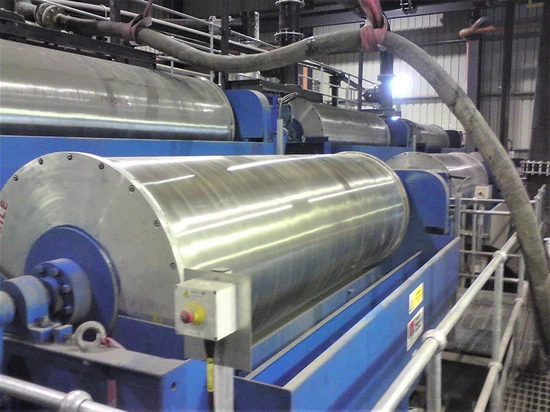
- Magnetic Drum Separators – Rotating drums capture and discharge magnetic materials.
- Overband Magnets – Installed over conveyors to remove ferrous metals from moving belts.
- Magnetic Grids and Plates – Fixed magnets for hoppers, chutes, and pipelines.
- High-Intensity Magnetic Separators – For weakly magnetic minerals such as hematite.
Types of Magnets Used in Magnetic Separators
The performance of a magnetic separator depends heavily on the magnet type used.
1. Neodymium Magnets (NdFeB)
- Extremely strong magnetic field.
- Ideal for fine ferrous particle capture.
- Common in high-intensity magnetic separators.
- Sensitive to high temperatures unless coated or specially designed.
2. Ferrite Magnets
- Low cost, corrosion-resistant, and durable.
- Suitable for removing large ferrous pieces.
- Lower magnetic strength compared to NdFeB.
3. Samarium Cobalt Magnets (SmCo)
- High temperature resistance (up to 350 °C).
- Strong corrosion resistance.
- Ideal for harsh environments like high-heat mineral processing.
4. Electromagnets
- Magnetic field strength can be adjusted.
- Can be switched on or off.
- Suitable for separating weakly magnetic minerals.
- Require external power and more maintenance.
Choosing the Right Magnet for Your Magnetic Separator
When selecting a magnet for a magnetic separator, consider:
- Material Type – Strongly magnetic, weakly magnetic, or non-magnetic.
- Operating Temperature – Choose SmCo for high-heat environments.
- Particle Size – Fine powders may need high-intensity NdFeB magnets.
- Cleaning Requirements – Manual, semi-automatic, or fully automatic cleaning.
Why Magnet Quality Matters
High-quality magnets ensure:
- Strong, stable magnetic fields.
- Long service life without significant demagnetization.
- Consistent separation performance.
- Resistance to heat, corrosion, and mechanical stress.
Final Thoughts
Magnets are the heart of every magnetic separator. Whether you need neodymium magnets for high-intensity separation, ferrite magnets for bulk ferrous removal, or SmCo magnets for extreme environments, choosing the right magnet type is crucial for efficiency and long-term performance.
If you’re sourcing magnets for magnetic separators, make sure they are built with reliable magnetic materials to deliver the strength, stability, and durability your process demands.
Leave a Reply